
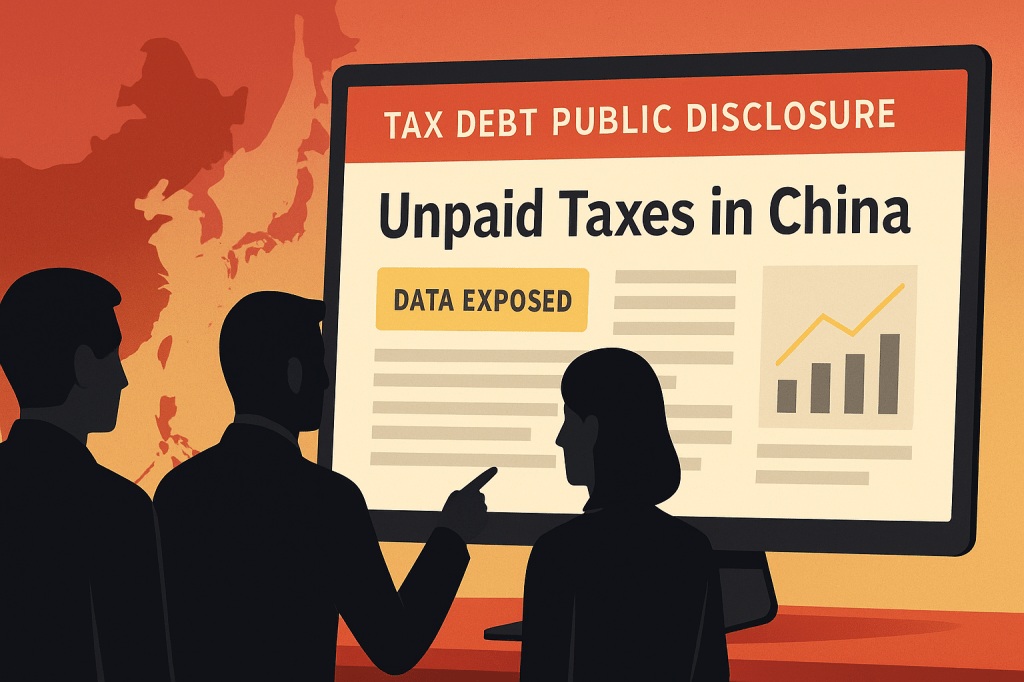
China has introduced a major shift in how it handles unpaid taxes. With Order No. 61/2025, published on 26 November 2025, the State Taxation Administration will start releasing monthly public lists of taxpayers with outstanding tax debts beginning 1 March 2026.
And this is not just bureaucratic housekeeping. It is a full reputational mechanism.
The STA will publish detailed information on its official platform, and local bureaus and media may amplify it even further. Public exposure becomes part of tax enforcement.
The list will include name, identification number, business location, amount of unpaid tax plus late fees, date of delinquency, and the authority releasing the information. And you get only three working days to confirm or challenge the information before it goes public.
There are exceptions. Bankruptcy, dissolution, and reorganization will keep taxpayers off the list, as will matters involving state secrets.
What I believe multinationals should take from this:
1. Public tax exposure in China will not stay in China
If a subsidiary appears on this list, the information will show up in:
- credit analyses
- M&A due diligence
- ESG scoring
- risk reviews across global business units
Tax transparency has gone international.
2. Tax risk is merging with corporate reputation
I find this shift particularly important.
Being tax compliant is no longer enough.
You must be publicly tax compliant.
This means governance teams, investor relations, and ESG committees all need to pay attention.
3. Litigation strategy will change
If maintaining a dispute results in visibility on a public list, even companies with strong cases may begin leaning toward settlement or payment plans.
The reputational cost is simply too high.
This is a major behavioral shift.
4. Supply chain vetting will intensify
Expect procurement departments to start asking suppliers:
“Have you appeared on a Chinese tax delinquency list?”
This could influence everything from contract renewal to vendor onboarding.
A concern:
Mistakes will happen.
A three-day review window is short enough that companies may appear on the list due to simple communication gaps.
I have seen how internal tax notifications can get buried under corporate complexity.
The reputational cost of such an error is massive.
Final thought:
This measure is part of a global trend.
Europe, Latin America, and the UK have already used public exposure as a compliance tool.
China now enters the arena in a much more systematic way.
Tax delinquency has become a public status.
Multinationals need to prepare for this reality, not only in China but anywhere governments follow this model.
 Gabriella Bastos
Leave a comment